
Have you ever bumped your toe and yelled “shoot!” instead of something stronger? If so, you’ve used a minced oath. A minced oath is a euphemistic expression formed by deliberately changing the spelling, sound, or part of a profane, blasphemous, or taboo word to make it socially acceptable. The term has been part of English since at least the 1800s, but the habit itself goes back to medieval times when people feared divine punishment for taking God’s name in vain.
In this guide, I’ll walk you through what a minced oath really is, why linguists named it after a kitchen technique, how these words are formed, and where you hear them today. By the end, you’ll recognize them in everyday speech, classic literature, and even your favorite TV shows.
Table of Contents
- What Is a Minced Oath?
- Why Are They Called Minced Oaths?
- How Are Minced Oaths Formed?
- Common Examples of Minced Oaths
- The History of Minced Oaths
- Are Minced Oaths Still Used Today?
- Minced Oath vs. Euphemism: What’s the Difference?
- Are Minced Oaths Acceptable?
- Frequently Asked Questions
- Final Thoughts on Minced Oaths
What Is a Minced Oath?
The Quick Definition
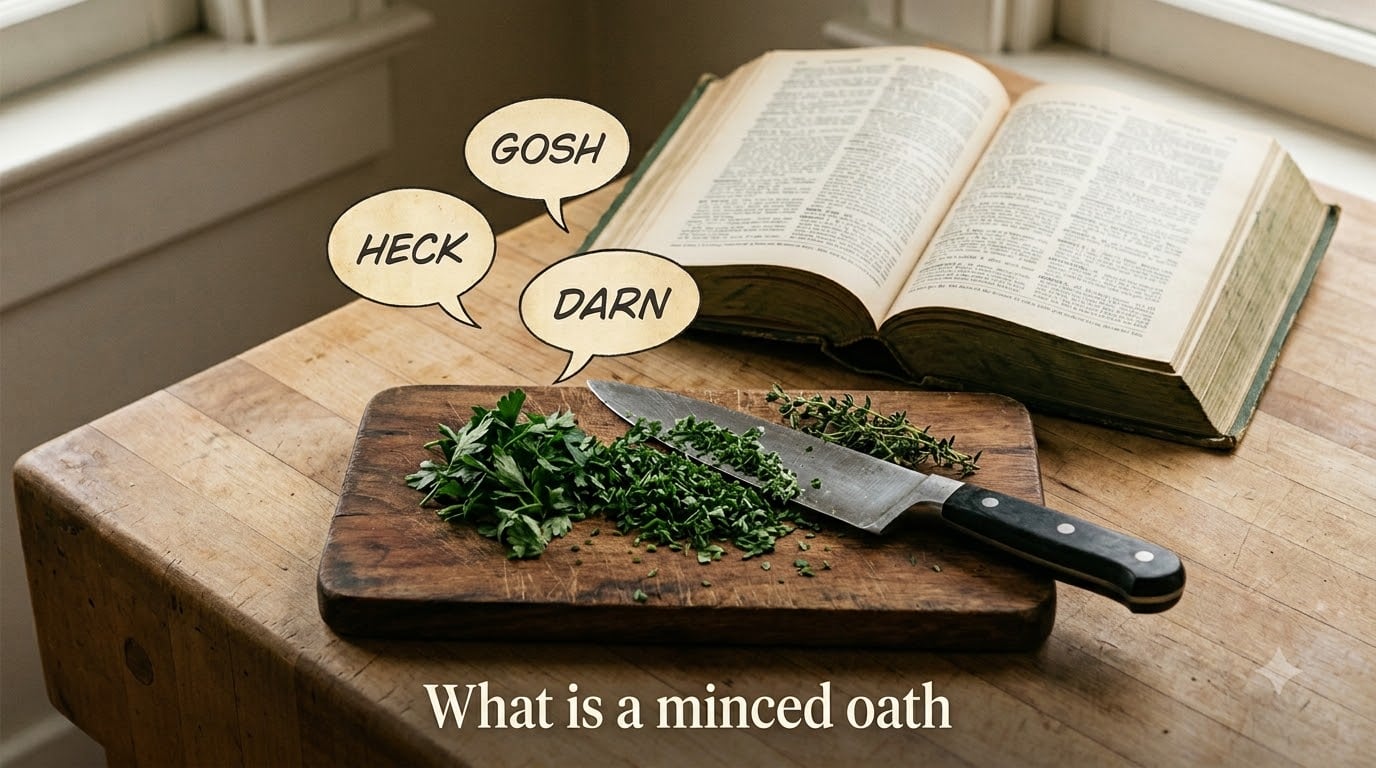
A minced oath is a substitute word or phrase used in place of a swear word, curse, or blasphemous expression. The substitute sounds similar to the original but has been deliberately altered to remove its offensive or taboo quality. Common examples include “gosh” instead of “God,” “heck” instead of “hell,” and “darn” instead of “damn.”
Unlike a true euphemism that simply replaces one word with another unrelated term, a minced oath keeps the sound or rhythm of the original. That’s what makes it feel so satisfying when you stub your toe and want to vent without crossing a line.
Why Are They Called Minced Oaths?
The Cooking Metaphor Explained
The word “minced” in minced oath comes from the same root as mincing meat or vegetables in cooking. Just as mincing cuts food into very small pieces, a minced oath “cuts up” a profane word by changing a letter, swapping a syllable, or shortening it. The result is a smaller, gentler version of the original.
Linguists borrowed this kitchen metaphor because it captures something important: the offensive character has been processed and reduced. You can still taste the original flavor, but it’s been toned down enough for polite company. The phrase appeared in English writing in the 19th century, though the practice itself is far older.
How Are Minced Oaths Formed?
Minced oaths aren’t random. They follow predictable patterns that linguists have mapped out. Once you know the patterns, you’ll start noticing them everywhere.
Phonetic Alteration
The most common method changes individual sounds in the word. “Gosh” comes from “God,” “darn” from “damn,” and “heck” from “hell.” The vowels and consonants shift just enough to break the direct link to the taboo word while keeping the four-letter punch.
Rhyming Substitution
Some minced oaths replace the original word with a rhyming alternative. “Fudge” stands in for a far more vulgar four-letter word, and “sugar” does the same. This pattern lets the speaker vent without using the exact profanity.
Shortening and Truncation
Cutting a word down to a portion of itself is another approach. “Gee” is a shortened form of “Jesus,” and “Gawd” simply mispronounces “God.” The truncation softens the religious reference while preserving the emotional weight.
Alliteration and Sound Play
Some minced oaths use creative sound changes. “Zounds” comes from “God’s wounds,” “strewth” from “God’s truth,” and “golly” from “God almighty.” These older forms compress whole religious phrases into single exclamations.
Common Examples of Minced Oaths
Below is a categorized list showing how widely minced oaths show up in modern English. I’ve grouped them by what the original taboo word is, so you can see the patterns at a glance.
Religious Minced Oaths
- Gosh — from “God”
- Golly — from “God Almighty”
- Gee — from “Jesus”
- Jeepers — from “Jesus Christ”
- Jeez — from “Jesus”
- Gawd — from “God”
- Goodness — from “God”
- Gracious — from “God gracious”
- Heavens — from “Good heavens” (a softened religious exclamation)
Secular Minced Oaths
- Darn — from “damn”
- Heck — from “hell”
- Shoot — from “shit”
- Fudge — from a vulgar four-letter word
- Sugar — same rhyme as “fudge”
- Balderdash — from a nonsense profanity
- Drat — from “God rot” (an old curse)
International Examples
- Zounds — English, from “God’s wounds”
- Strewth — Australian/British, from “God’s truth”
- Bloody — British, originally “By Our Lady” (a religious oath)
- Sacrebleu — French, from “sacred God”
- Tabarnak — Quebecois French, a celebrated minced oath
- Feck — Irish, from a stronger vulgar term
The History of Minced Oaths
Medieval Origins
Minced oaths became widespread in medieval Europe, where people feared that taking God’s name in vain was a serious sin. Words like “zounds” (God’s wounds) and “strewth” (God’s truth) emerged as safer alternatives. By the 14th century, English speakers were already using compressed and altered forms of sacred phrases to express surprise without committing blasphemy.
The Victorian Era and Bowdlerization
The Victorian era pushed minced oaths further into mainstream use. As public standards around decency grew stricter, writers and readers needed polite alternatives. The term “bowdlerization” comes from Thomas Bowdler, who in 1818 published a family-friendly version of Shakespeare that swapped out offensive language. Many of the substitutes he used became popular minced oaths in their own right, including “darn” and “heck.”
Are Minced Oaths Still Used Today?
Absolutely. Minced oaths continue to thrive in everyday conversation, especially around children, in workplaces, and in mixed company. They allow people to express strong emotions without the social cost of actual profanity.
Minced Oaths in Pop Culture
You can spot minced oaths throughout modern media. The TV show The Good Place famously used “fork” instead of a stronger word, alluding to the show’s running gag. The British sitcom Father Ted built entire jokes around the Irish minced oath “feck.” These shows prove that even made-up minced oaths can catch on when enough people hear them.
Why They Persist in Modern Speech
Research suggests that swearing, even when minced, can relieve pain and stress. Minced oaths give speakers the emotional release of profanity without the social consequences. They also serve as in-group slang, signaling shared cultural values with anyone who catches the reference.
Minced Oath vs. Euphemism: What’s the Difference?
All minced oaths are euphemisms, but not all euphemisms are minced oaths. A regular euphemism might replace “died” with “passed away” or “toilet” with “restroom.” These swaps have no phonetic link to the original.
A minced oath, by contrast, keeps the sound or rhythm of the original word. “Heck” sounds like “hell.” “Gosh” sounds like “God.” That phonetic connection is what makes a minced oath a minced oath. Without it, the term is just a regular euphemism.
Are Minced Oaths Acceptable?
Religious Perspectives
The acceptability of minced oaths depends on the community. Some religious groups consider any reference to sacred names, even altered ones, disrespectful. Others argue that minced oaths are harmless because the speaker is clearly avoiding the original. The Catholic Church, for example, has historically viewed minced oaths taken in the confessional as a sign of incomplete repentance, since the speaker still knows what they meant to say.
Social and Professional Settings
In most workplaces and polite settings, minced oaths are perfectly acceptable. They let you vent frustration without offending anyone. Many people don’t even realize they’re using minced oaths because the words feel so natural. If you want to sound more formal, you can lean on true euphemisms or silence altogether.
Frequently Asked Questions
Why are they called minced oaths?
The term comes from the kitchen technique of mincing, which cuts food into tiny pieces. A minced oath cuts up a profane or taboo word by altering its spelling, sound, or structure. The result is a smaller, gentler version that keeps the original flavor but removes the offensive edge.
What are some examples of minced oaths?
Common examples include gosh instead of God, darn instead of damn, heck instead of hell, shoot instead of a vulgar term, and sugar as a rhyming substitute. International examples include zounds and strewth in English, sacrebleu in French, and feck in Irish English.
What are the minced oaths for Jesus?
The most common minced oaths for Jesus include gee, jeez, jeepers, and jiminy. Older forms include gadzooks, an old English exclamation derived from God’s hooks, a reference to the nails of the crucifixion. These substitutes let speakers express surprise without taking the sacred name in vain.
Can Christians use minced oaths?
Views differ. Some Christians and other religious groups consider any reference to sacred names, even altered ones, inappropriate. Others see minced oaths as acceptable because the speaker is clearly avoiding the original taboo word. Many believers use them as a compromise when they want to express strong emotion without breaking religious rules.
Are minced oaths different from euphemisms?
Yes. All minced oaths are euphemisms, but euphemisms are broader. A regular euphemism replaces a word with an unrelated softer term, like passed away for died. A minced oath keeps the sound or rhythm of the original, so heck still sounds like hell and gosh still sounds like God. That phonetic link is what makes a minced oath a minced oath.
Final Thoughts on Minced Oaths
A minced oath is more than a polite stand-in for swearing. It’s a small piece of linguistic history that reveals how language bends under the pressure of social and religious rules. Whether you say “gosh,” “heck,” or “sugar,” you’re using a technique that English speakers have relied on for centuries to express strong emotions without breaking decorum.
Next time you hear someone drop a “fudge” or “shoot,” you’ll know exactly what they meant and why they chose that word. The kitchen metaphor of mincing fits perfectly: a small cut can completely change the character of what comes out. That same principle turns a curse into a minced oath, and keeps the rest of the conversation friendly.